

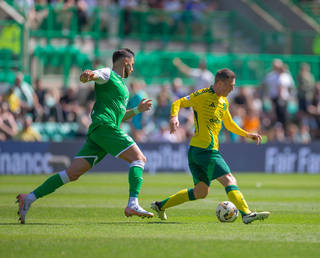
Hibernian remain one of Scottish football’s familiar fixtures: founded in 1875, based at Easter Road Stadium, and carrying a history that includes Scottish Cup and League Cup success. For Celtic supporters, they are a regular domestic reference point rather than a novelty, a club with enough pedigree to make poor seasons look especially untidy.
The 2026-27 campaign has been difficult. After 12 Premiership rounds, Hibs sit twelfth with eight points, while also having reached the League Cup final and the Conference League qualifying play-off round. Recent league form has been thin: a 1-1 draw at St Mirren followed defeats to Celtic, Falkirk, Dundee United and Kilmarnock, with another draw against Aberdeen in that run.
The squad is valued at around £17m by Transfermarkt, with 28 players and an average age of 26. Martin Boyle and Owen Elding lead the scoring with five goals each, while Nathan Lowe, Adam Mayor and Felix Passlack have two apiece. Hibs have struck first inside 20 minutes in six of 14 league matches, but that has not translated into control often enough.
The numbers point to a side more secure away than at Easter Road: at home they average 0.8 goals scored and 1.8 conceded, while away they sit at 1.2 for and 1.2 against. Their current standing is clear enough – bottom of the Premiership, still within the season’s early grind, and relevant to Celtic chiefly as a domestic opponent capable of making games awkward without yet showing the consistency to climb.
📈 Key stats and insights

⚔️ How they compare to Celtic
Celtic hold a clear edge across the board: they lead the table with 28 points and outscore and out-defend Hibernian — Celtic average markedly more goals and concede around 0.8 per match compared with Hibernian's 1.5 — leaving Hibernian reliant on away resilience and set-piece volume if they are to bridge the gap.